
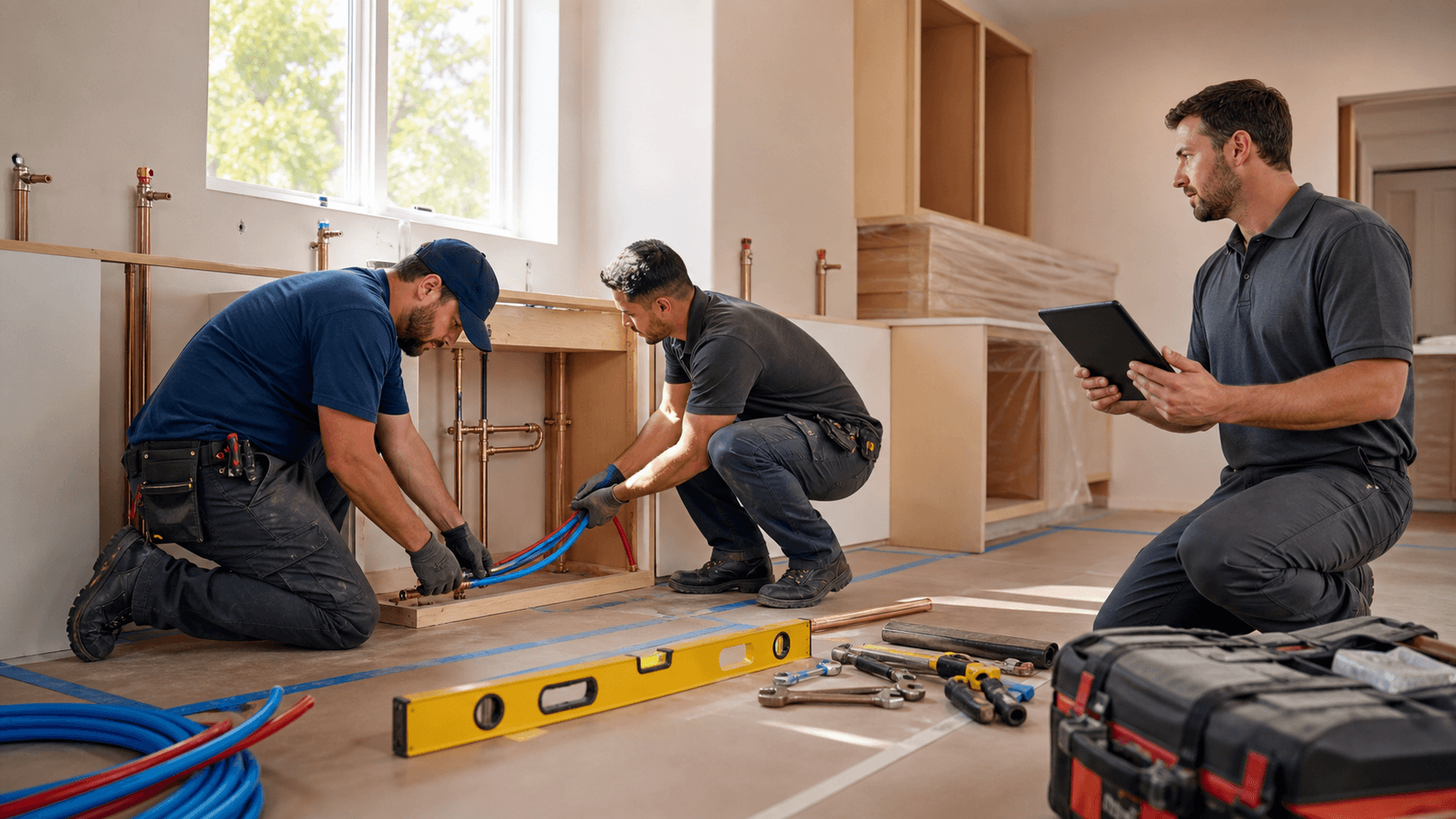
When a kitchen remodel starts, plumbing is one of the first things we look at. Before we talk cabinets, countertops, or lighting, we need to know exactly where pipes go and how they connect to key fixtures. It might not feel exciting, but plumbing is the backbone of everything that follows. If it's not handled right from the start, it can slow down the whole schedule or force changes after walls are already built. That's why any skilled kitchen contractor begins with plumbing plans first. It creates a clear path for the rest of the job.
Why Plumbing Impacts the Whole Kitchen Layout
Plumbing affects far more than just the sink. Every major appliance that uses water must be accounted for before anything else is installed. That includes refrigerators with water lines, dishwashers, pot fillers, and more. We need to map out exactly where those appliances go before setting pipe locations.
If we don't solve plumbing early, the rest of the layout can fall apart quickly. It's not just which wall the sink is on. It's where the lines run inside those walls and floors, how far they reach, and what else they might pass along the way. Once a wall or floor is closed up, moving a pipe can mean ripping things open again. That adds time, cost, and stress that could have been avoided with thoughtful planning.
Getting plumbing right also means other trades, like electricians or installers, can work more efficiently later, knowing lines won't need to be rerouted or moved once floors are covered or cabinets are set.
How Plumbing Affects Timelines and Costs
When plumbing is done right from the beginning, the rest of the remodel can stay on track. One of the most useful checkpoints in the early build is the rough-in phase. That's when plumbers place all lines where they need to go, but before anything is boxed-in or covered by drywall or cabinets. If this part goes smoothly, other trades can follow without pause.
But if plumbing decisions are delayed or changed mid-project, it can hold everything up. Imagine an inspector walking through only to find that pipes were added last minute or fixtures were planned in the wrong place. That might mean revisiting framing, adjusting electrical layouts, or removing finished work. Getting plumbing sorted early prevents all of that.
Timely plumbing work makes it easier for each finishing step that follows, so scheduling is rarely an issue and costs from surprises or repairs are kept down, smoothing the entire remodeling process.
What Kitchen Fixtures Need Plumbing Planning
It's easy to think only about the main sink or one major appliance. But there are several others that need plumbing, and we plan for them as early as possible.
- Dishwashers need both water supply and drain lines, often next to the sink but sometimes separate.
- Pot fillers over a stove require water lines to be placed well above counter level.
- Some refrigerators include filtered water and ice dispensers, which means running plumbing to that wall.
- Secondary sinks, like those in a prep station or island, can change the location of supply and drain lines entirely.
Kitchen islands add another layer. If a sink goes there, those pipes likely have to run under the floor, before any cabinetry or flooring is installed. Without preparing for that early, we risk cutting into finished floors to solve it later.
Our Verona showroom features layouts for kitchens with islands, prep sinks, and specialty fixtures like pot fillers, serving as a practical guide for plumbing needs during planning.
Smart planning for each fixture or appliance helps the entire kitchen come together. By understanding exactly what needs to be plumbed and where, we stay organized and can see how everything relates before moving forward.
Seasonal Considerations for Plumbing Work in Verona, NJ
Planning plumbing in early summer gives us a solid window for reliable work. In places like Verona, NJ, June weather usually gives dry and mild conditions. That offers fewer delays for opening walls or working on foundations if needed. It also gives us time to finish the rest of the remodel before fall, when school starts and schedules get tighter.
Another factor in this area is the age of the homes. Many Verona homes have older plumbing that wasn't built for today's kitchens. That might mean updating pipes or reworking supply lines entirely. Taking care of that upfront lets us avoid rushed fixes when the rest of the kitchen is already going in.
We routinely advise locating and replacing old supply lines during remodeling to meet code updates and support appliances safely. This keeps your kitchen running smoothly for years to come.
Summer is also a time when water usage and humidity can make plumbing work a bit more challenging if not planned correctly. Focusing on early seasonal work lets us prevent issues that come from rushing as colder weather draws closer.
How a Kitchen Contractor Keeps Plumbing on Track
We don't just hand off the plumbing and hope it fits the rest of the project. From the start, we keep track of which fixtures are being installed, review measurements against the design, and double-check that everything fits before pipes are placed. That means thinking through real-life details, like how drawers or shelves open near a pipe or whether a tall faucet will sit under a cabinet.
We keep close contact with plumbers during the layout process and spot conflicts before they cost time. It may not be obvious during planning, but we've seen how a small fixture change can shift things more than expected. If changes happen mid-remodel, we work quickly to adjust surrounding elements without creating more problems.
By staying involved, monitoring each step, and communicating clearly, kitchen contractors are able to guide a remodel forward even when adjustments or unexpected surprises come up on the job.
It's often small details that make the difference. We check every placement before pipes are finalized, ask questions about user needs, and anticipate where challenges might arise. With good teamwork and best practices, plumbing stays aligned with the kitchen design all the way through.
A Better Remodel Starts with the Right First Steps
Starting a remodel with good plumbing plans makes everything easier. It gives shape to the entire layout and helps avoid problems that show up too late to fix easily. By lining up plumbing routes with the rest of the kitchen early, we set a pace other trades can follow without delay.
Getting the behind-the-scenes work right gives structure to the project. That means lighting plans fall into place, cabinet spacing makes more sense, and appliance hookups are smooth. When we lead with plumbing, it clears the way for every other part of the kitchen to come together just like it should.
Planning a remodel in Verona, NJ, during the summer gives you the advantage of addressing plumbing needs early so the rest of your project moves forward smoothly. Getting pipes, drains, and fixture placement right from the start keeps your design on track and helps you avoid costly rework later. Working with a knowledgeable kitchen contractor makes all the difference. At NJ Kitchens and Baths, we lay the groundwork from day one so your remodel stays on schedule and finishes strong. Contact us today to start planning your ideal space.