Introduction
Before a single tile comes up or a fixture gets moved, safe demolition always comes first. Any bathroom contractor we send into a home starts by looking at safety, not speed. Homeowners in Verona, NJ, often begin renovation work in the summer when schedules are a little more flexible and the weather is on our side. That gives us the chance to take our time during early steps like teardown, without rushing through them. A clean and cautious demolition helps avoid trouble later, and we do not take any shortcuts with that.
Getting familiar with how demolition actually works can ease a lot of the unknowns that people feel as a project gets started. Below is a closer look at the step-by-step approach we follow to remove old bathroom materials without putting your home, or anyone in it, at risk.
Planning Before Any Demo Begins
We never start demolition without a plan. It is not just about pulling out the sledgehammer. We have to know exactly what we are dealing with inside the walls and beneath the floors.
- We scan for plumbing, electrical, and any gas lines the room might have. These are not always visible, so we use tools and past build knowledge to map things out.
- Water lines are shut down and electricity is disconnected at the panel before anything is touched. Marking where these systems live helps us avoid them during buildout and keeps the rest of the home safe.
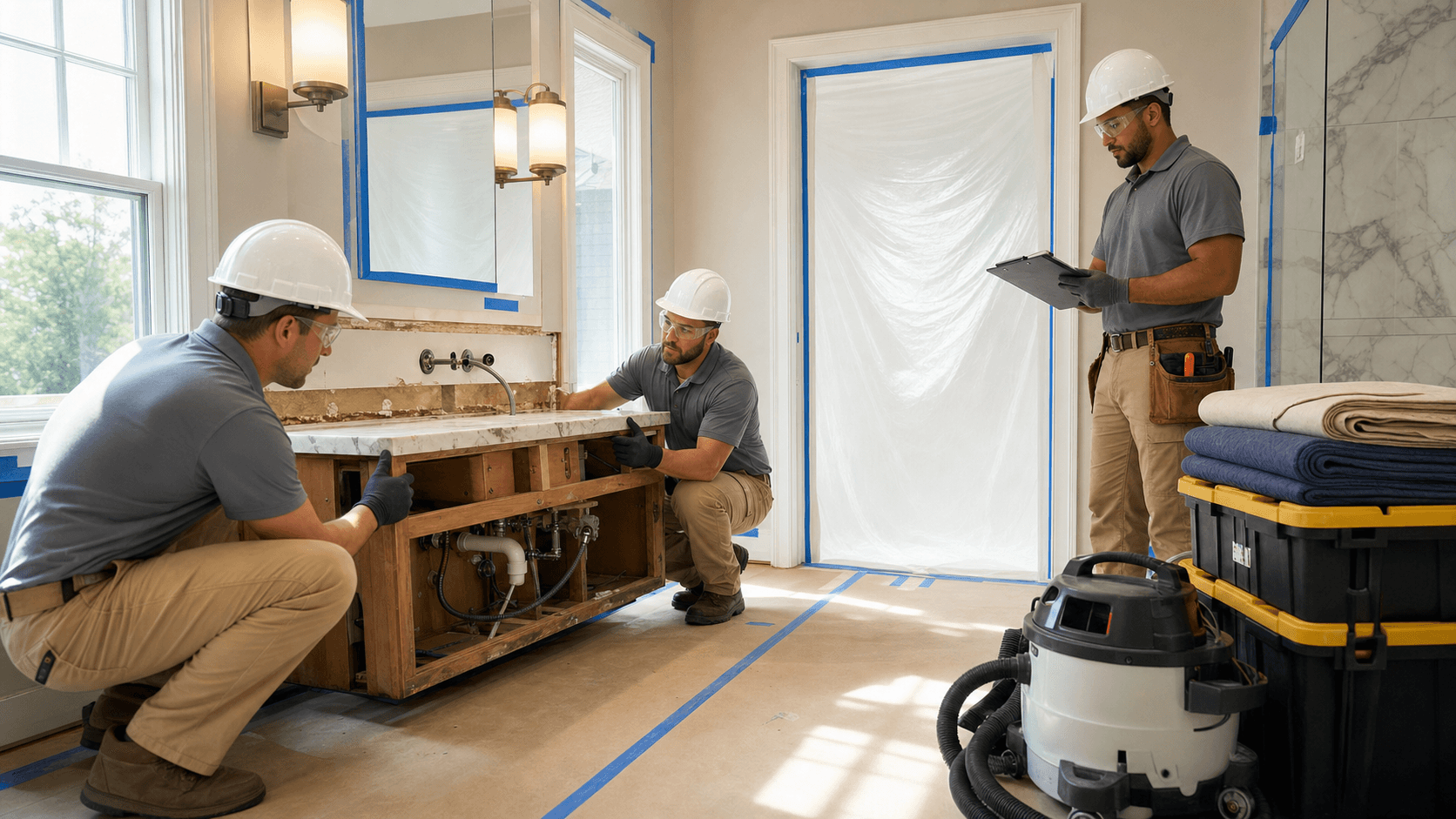
- Once the safety checks are complete, we prep the space. That means sealing off the bathroom from other areas and laying down protective material to catch dust and debris. Tools and safety gear, like gloves, goggles, and masks, are readied and assigned before anything is removed.
Taking time with setup keeps every stage of the project cleaner and safer, and it gives us a clear game plan before the real work begins.
Removing Fixtures and Hardware Safely
Next comes the methodical part, taking things out without creating a mess. Every part of a bathroom is connected to something, often with delicate or aging hardware. We follow a specific order so nothing breaks or spills where it should not.
- We remove things like mirrors, light fixtures, towel bars, and wall-mounted shelves first. Then we go after vanities, sinks, and cabinets.
- Toilets and bathtubs are heavier and often tied to water lines in hidden ways. We disconnect lines carefully, drain them when needed, and have towels and buckets ready if anything unexpected comes out.
- Bigger fixtures, like countertops or cast-iron tubs, are moved by two or more people. These pieces often do not fit through narrow hallways or door frames, so we measure before lifting and cover sharp corners to protect the walls on the way out.
We take our time here for a reason. If these parts are not taken out cleanly, they can scrape floors or leave a trail of damage behind.
Protecting the Structure of the Home
Once the surface layers are cleared, we turn our attention to the walls and floors. Removing drywall or flooring without knowing what is behind or under them can be a bad surprise. So we go slow.
- We cut into drywall with care, testing first to see what is behind it. Sometimes we uncover support beams, plumbing, or wires that were added during the life of the home and never documented.
- Support beams are especially sensitive. We never remove any framing without first checking if a wall is load-bearing. If it is, we plan with builders and engineers before making changes.
- Dust is controlled with barriers and filtered fans. We cover the floors with protective boards and shields that will not slide, and we place air filters nearby to catch debris that escapes.
This phase tends to be the messiest, but with the right prep, it stays contained. The goal is to avoid any secondary damage while making space for the next phase of work.
In our Verona showroom, we provide bathroom remodel planning and guidance on supporting load-bearing walls and managing utility reroutes to keep your home safe.
Disposing of Materials Correctly
Getting rid of debris is not as simple as tossing it all into a bin. Some materials can be recycled while others must be handled based on state or town rules. In Verona, NJ, that includes steps we follow to avoid problems.
- Sharp debris like tile shards, glass, and nails go into strong, sealed containers. We check twice to make sure nothing has fallen loose where kids, pets, or shoes can find it.
- We load leftover drywall, sink parts, tubs, and other items in sections. Recyclables go with recyclables, and trash goes to designated disposal centers where we know it will be processed the right way.
- At the end of each workday, we do a clean pass. That includes sweeping floors, wiping off walk paths, and getting any leftover materials into containers or carts away from foot traffic.
Keeping the demo zone clean makes our job easier, and it keeps your space safer while the project is happening around it.
Why Safe Demolition Sets the Tone
Good demolition clears the way for smooth building. Chipping a tile wrong or cutting a pipe too fast can cause a domino effect that hurts the whole schedule. When we move slowly and do it right, every phase after gets easier.
- A bathroom contractor who plans safe, clean removal work makes fewer missteps during install and layout phases.
- You are more likely to feel prepared as a homeowner when you see that things are being done carefully, not rushed. We try to keep you informed during each step so you are not guessing how something was handled.
- Verona, NJ, tends to bring warm and steady weather in June, making it a good time for remodels that require open windows, ventilation setups, or hauling materials across driveways and yards. Summer helps reduce delays and gives demolition crews clearer days to work.
Safe job setups give us more control of the project and more confidence that what comes next will fall into place. We know from experience that every phase of a remodel benefits from a clean start, and that starts with care, prep, and patience during demo.
Planning updates in your home this summer? Partnering with a trusted bathroom contractor can make all the difference, from demolition to final design. At NJ Kitchens and Baths, we pay attention to every detail to make sure your remodel looks great and functions perfectly. Connect with us to discuss your renovation goals and schedule a time to get started.