Introduction
When it comes to creating a kitchen that works well every day, layout and lighting go hand in hand. Without good lighting, even the most well-planned kitchen can feel off. And when layout does not consider how light moves through the space, you end up with shadows where you need visibility or harsh brightness where you want calm.
That is where a kitchen designer comes in. Part of our job is making sure your layout supports your lighting and your lighting supports how you use the space. From natural sunlight spilling in during the longer days of late spring in Verona, NJ, to the placement of overhead fixtures or smaller task lights, everything plays a role in how your kitchen feels and functions.
Designing for Function First
We always begin with the layout. The way a kitchen is arranged sets the tone for everything else, including how we light it. If we jump into lighting choices before understanding where people will stand or move, we are guessing in the dark.
Each part of the kitchen has a job to do, and each zone asks for a different kind of light:
- Prep areas like countertops need clear, focused lighting so you can see what you are chopping or mixing.
- Cooking zones benefit from bright, even lighting over the range or cooktop so you are not squinting while stirring.
- Cleanup spots like the sink should never be dim or shadowed. Water and sharp tools do not mix with poor lighting.
A layout that fits how you live makes the best use of space. Then, we match the lighting to support that function. If traffic flows smoothly from fridge to sink to stove, the lighting needs to follow that same path without gaps or glare.
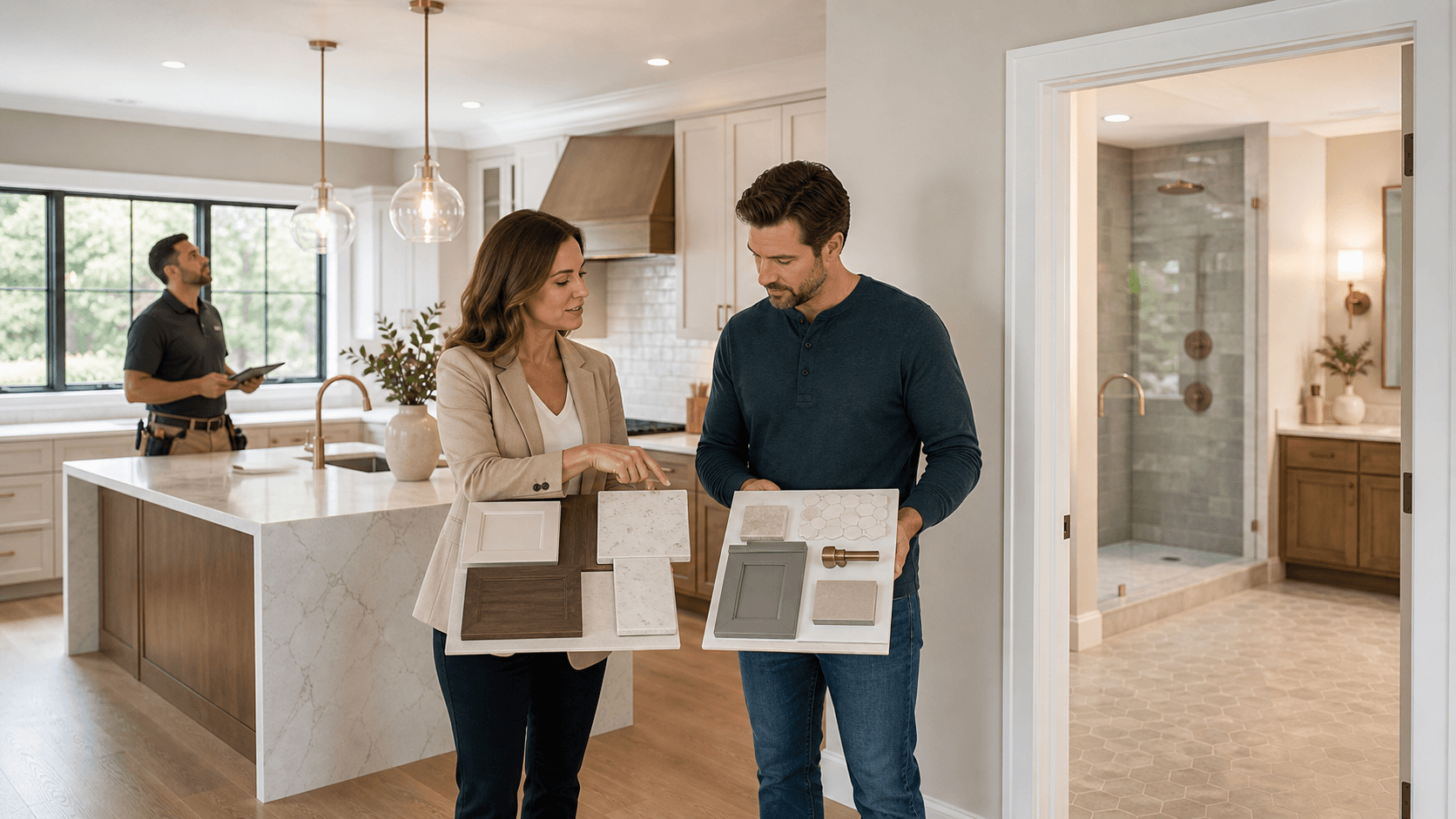
The NJ Kitchens and Baths Verona, NJ showroom spotlights functional layouts and a variety of lighting fixtures, so you can see how proposed plans will look in real spaces.
Design is often about solving small problems before they become big ones. For example, you might notice a kitchen feels tight, but the real challenge could be that shadows make the space feel even narrower. When the layout allows light to fall naturally and fixtures are chosen to avoid dark corners, the kitchen becomes simpler and more pleasant to use. Good function never means sacrificing style, either. It is about finding the plan that lets everything work together.
How Lighting Choices Reinforce the Layout
Once we have mapped out zones and daily tasks, we turn to the types of lighting that make those areas work. We keep things simple by balancing three main types:
- General lighting gives the room its overall light. This usually comes from recessed lights, ceiling fixtures, or other broad sources.
- Task lighting puts focus where you need it most, like under cabinets or over the sink.
- Ambient lighting adds comfort and warmth, such as toe kick LEDs or pendants with a soft glow.
Each type plays a part depending on where it is placed. For example, if we miss task lighting over the stovetop, you will end up cooking in a shadow. If general lighting is too dim in the main walkway, dinner prep can feel frustrating or even unsafe.
We do not just plug in lights where they look good. We put them where people cook, clean, and gather, so the room works with you instead of against you.
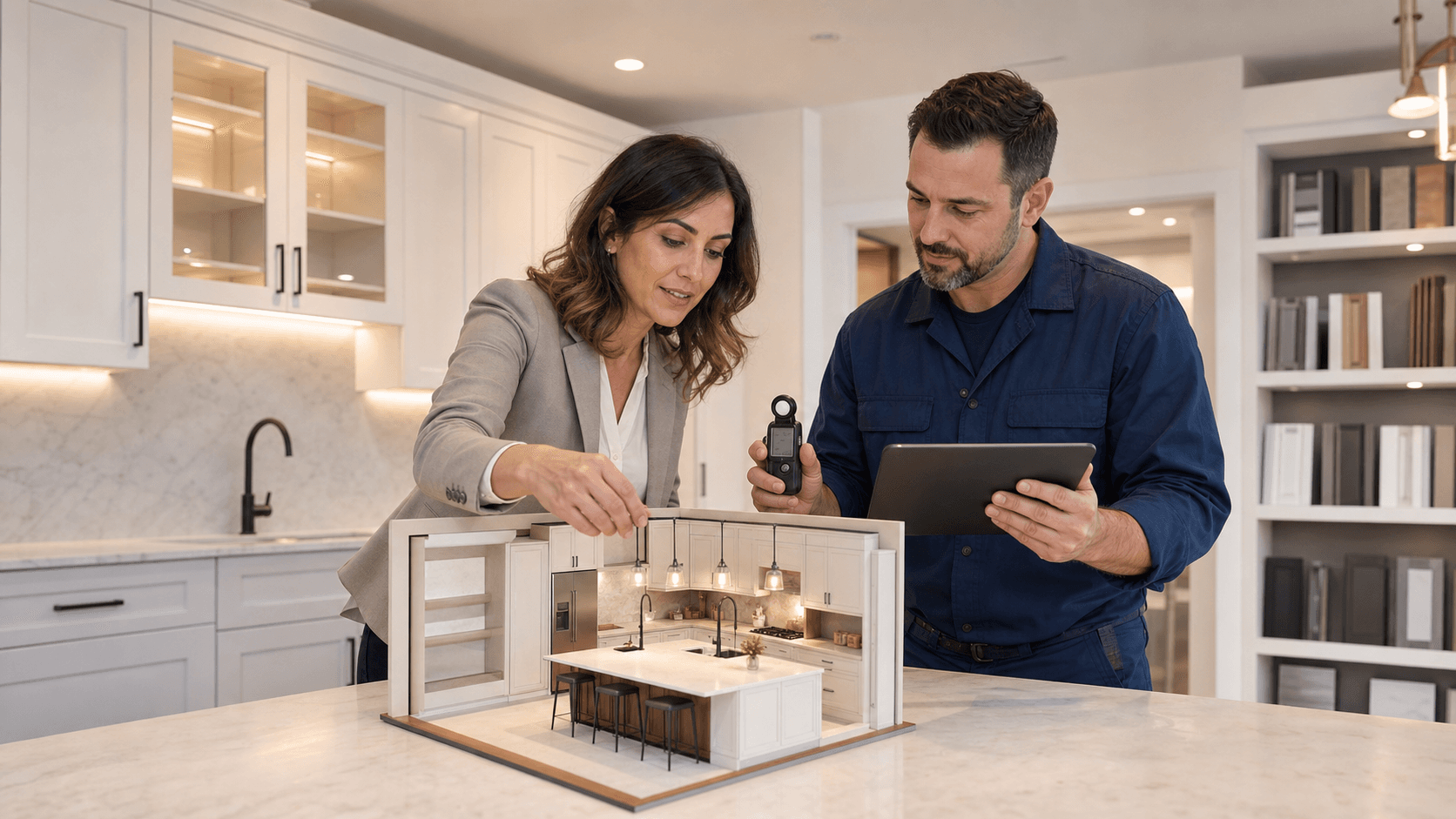
When picking fixtures, we look at the whole plan. For instance, if cabinets or beams block overhead light, adding undercabinet or toe kick lighting can fill in dark areas. If a kitchen island is a hub, we might use pendants spaced correctly so they brighten the surface but never overpower the room. Balance is key for both brightness and comfort. When the lighting serves the way you move in the kitchen, everything feels just right.
Common Fixes a Kitchen Designer Might Make
Even small lighting mistakes can become big annoyances over time, especially in kitchens that are busy all day. These are some of the issues we look to fix early on:
- Overlit areas like kitchen islands that feel too bright compared to the rest of the room
- Dark corners where cabinets block light or create odd shadows
- Fixtures too far from work zones, making it hard to prep food or read a recipe
We might shift a layout slightly so that a window lines up better with the main workspace. Or we will add undercabinet lighting to fix that shadow at the sink. Sometimes it is as easy as choosing a bulb with a wider beam or warmer tone. Small changes go a long way when they solve something that affects how you use the space every day.
Addressing these details helps the kitchen feel more welcoming. It also makes working in the space easier and safer. Sometimes, moving a fixture by just a few inches is all it takes to get rid of a shadow that has been bothering you for years. Other times, the fix is swapping in a bulb that doesn't feel so harsh early in the morning. Fixes do not have to be big or flashy, but they have to solve what you notice most.
Considering the Time of Year and Natural Light
At the end of May in Verona, NJ, homes see sun early in the morning and later into the evening. That natural light changes how a kitchen feels and how much artificial light you really need.
If your kitchen has large windows, the late spring sunlight may angle in stronger during parts of the day. We plan around that by:
- Placing work zones where they get the best benefit from daylight
- Keeping dimmable lighting options nearby for balance when the sun fades
- Making sure window placement does not wash out counters or cause glare on appliances
A kitchen that works in early evening light during May or June might feel very different come fall. That is why we think beyond just seasons and plan for changes in sunlight and shadow through the year.
The way natural light enters a kitchen influences both your comfort and how much power you use during the day. Sometimes, a spot that feels perfect in the morning ends up shaded by afternoon. That is when having layered lighting, general, task, and ambient, lets you adjust quickly. During long spring evenings, you might only need to turn on the pendants over the table and leave other lights off. But as the sun sets later, your artificial lights step in so you can keep using the kitchen as long as you need.
We also pay attention to window treatments and how they impact the light. Sheer curtains or adjustable blinds control the amount of sunlight that enters, stopping glare but not blocking the entire view. This flexibility lets your kitchen stay cheerful in any season.
Matching Style with Comfort
Even if a fixture looks great on its own, it still has to feel right in your kitchen. We look at the size of the space, the tone of the layout, and how often each zone gets used.
- Large fixtures in small kitchens can feel overwhelming and throw off visual balance
- Cool white bulbs may sound good in theory, but often feel harsh compared to softer tones
- Pendant lighting should match layout paths, not sit directly in line with busy walking zones
We never want light to distract from using the kitchen fully. Style matters, but it should not make things harder to see or harder to enjoy. A good fixture supports the room without stealing attention or shining directly in your eyes.
We believe comfort comes first, even when you want a trendy look. A light fixture should blend with cabinets, wall color, and appliances. We sometimes recommend trying a few test bulbs to see how their glow affects the feel of the room. The size and height of each fixture matters too, so nothing gets in the way or seems out of place. When style and function work together, your kitchen feels inviting at any time of day.
NJ Kitchens and Baths offers kitchen design consultations that walk you through fixture selection, bulb choices, and lighting placement as you view real layouts in our Verona, NJ showroom.
Why Seamless Layout and Lighting Make a Difference
When we plan layout and lighting together from the start, the kitchen ends up easier to live in. You will not have to think twice about where a light switch is or whether that pendant is blocking your view. The details support your routine instead of slowing it down.
As kitchen designers, we look at how people move, how light fills each part of the room, and how a space feels during different times of day. Especially during long spring and summer evenings in Verona, NJ, the light inside and outside needs to work together. When that happens, your kitchen becomes brighter, calmer, and ready for whatever the day brings.
Planning a kitchen that feels brighter, flows better, and supports your routine starts with an intentional layout and thoughtful lighting. We always consider how each space is used before choosing fixtures, making sure everything fits perfectly and nothing feels too harsh. A well-designed layout paves the way for smart choices, helping your kitchen stay comfortable throughout the year, especially during long spring evenings in Verona, NJ. To see our approach to design that works smoothly, connect with a kitchen designer who understands the needs of your space. When you are ready to get started, reach out to NJ Kitchens and Baths.