Late summer in places like Verona, NJ often holds onto the heat, especially as August winds down. When your kitchen feels stuffy or overheated, even simple tasks like boiling water or roasting vegetables can be frustrating. That's where good design comes into play. If you're planning kitchen remodeling during this time, smart layout decisions and cooling features can make life easier now and keep things more comfortable year-round. A few strategic updates can help manage the indoor temperature without getting in the way of your project's timeline.
Keep Heat-Producing Appliances in Check
Appliances like ovens, cooktops, and microwaves push out extra heat, sometimes more than we expect. If they're positioned poorly, they can turn your kitchen into a hot zone when they're running. Rearranging their placement during the planning phase can help lessen that effect.
- Try keeping ovens and cooktops away from tight corners or places where people stand often. This gives heat more room to flow out into open space instead of lingering.
- A vented range hood can pull warm air up and out of the kitchen. If your current setup struggles with that, it might be worth upgrading the ventilation while remodeling.
- Placing small appliances like toaster ovens or microwaves under the counter rather than up top helps keep the warm air they generate away from chest or face level when you're using them.
Adjustments like these sound small, but they can take the edge off summer heat.
Choose Cooling-Friendly Materials and Finishes
Some finishes hold on to heat more than others. With kitchen remodeling, every material choice has its own job, and helping the space stay cooler can be one of them.
- Pale surfaces like white or soft gray countertops bounce light instead of trapping it, which can keep prep areas feeling cooler.
- Natural materials such as porcelain, ceramic tile, or stone tend to stay cooler to the touch compared to many synthetic options. That means your work surfaces won't get as hot under the summer sun.
- In very sunny kitchens, high gloss finishes can make the space feel warmer due to their reflective nature. Choosing matte or textured finishes in cabinets or tile can help avoid that mirror-like quality.
These decisions don't take anything away from style or function, if anything, they make the space more enjoyable to spend time in.
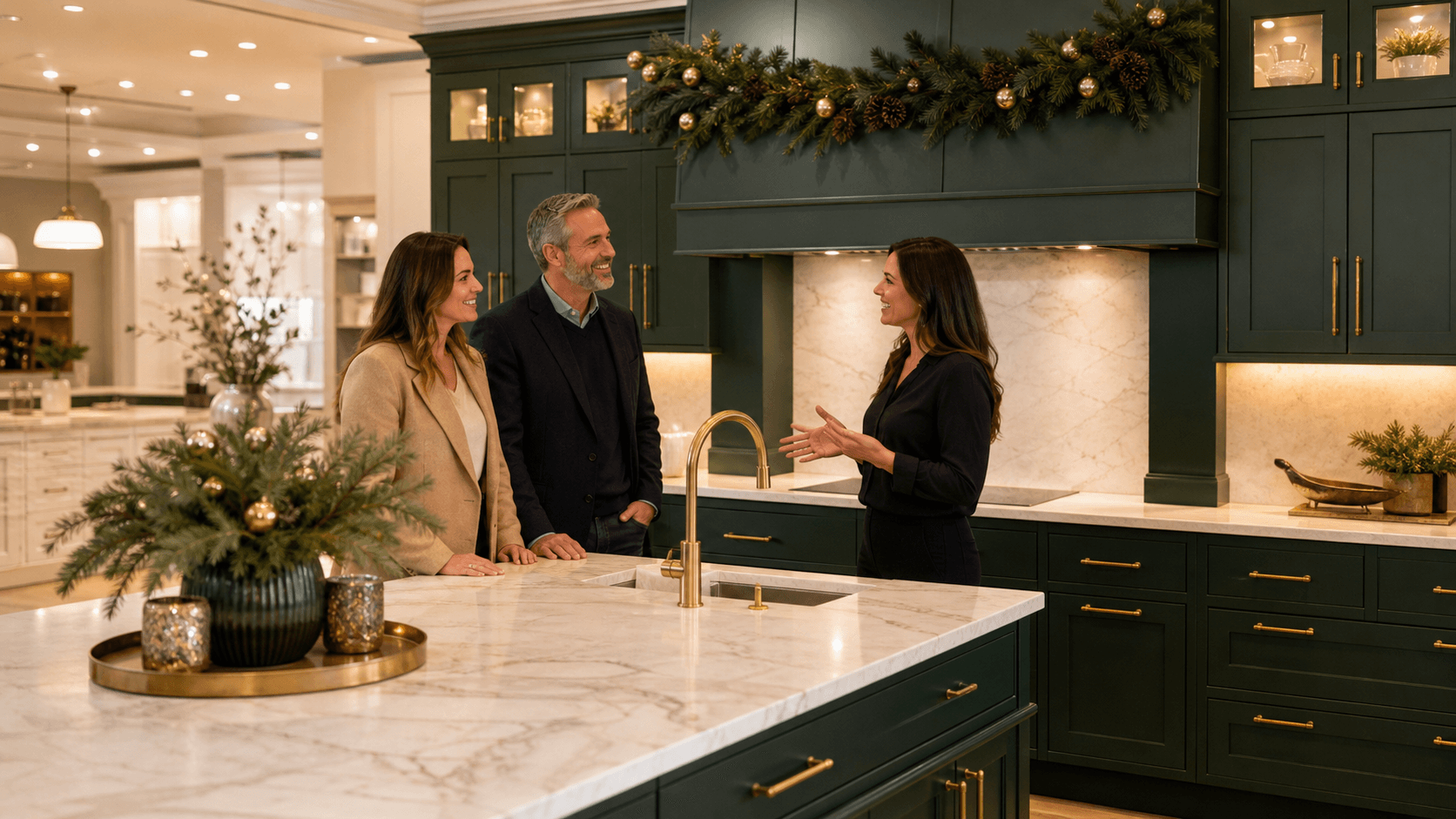
Our Verona showroom features displays with tile, stone countertops, and matte cabinetry from trusted brands such as Fabuwood and Lauriermax, letting you try out material finishes in person.
Let Natural Airflow Work for You
Cross-breezes can do a lot more than you might think, especially when your kitchen has the right layout to support them. Letting warm air escape naturally is one of the easiest ways to bring relief without relying only on cooling systems.
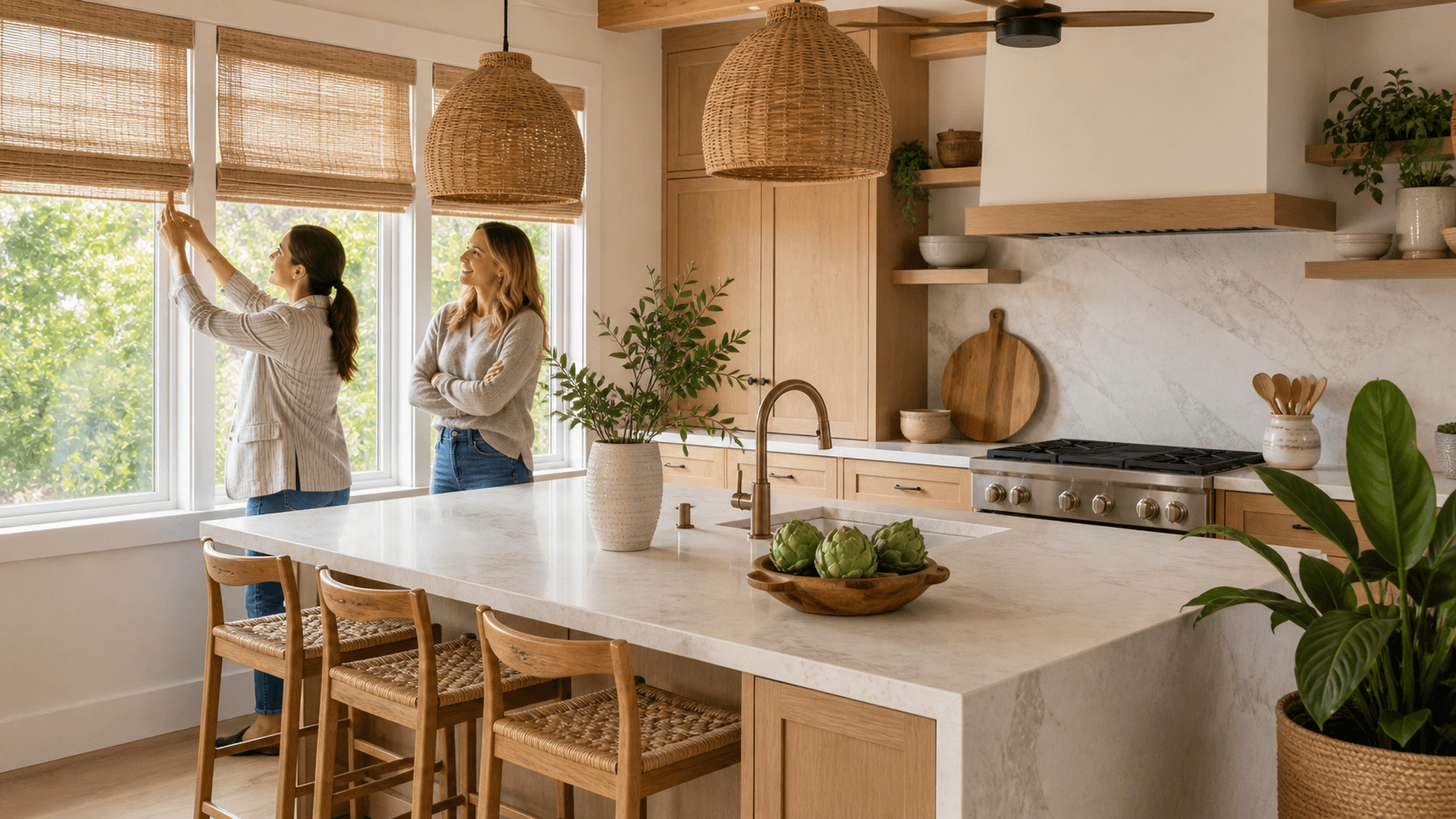
- Open shelving instead of upper cabinets near windows lets warm air pass through easily. With less bulk up high, it also gives a lighter, more breathable feel to the room.
- When drawing up a kitchen layout, we try to position windows, openings, or vents so air can flow cleanly across from one side to the other. Even one small window across the room can help.
- With lighting plans, there's often room to include ceiling fans or small directional fans that stay out of the way but keep the air moving. These can be especially helpful over prep or dining areas.
Airflow doesn't solve everything, but it's often overlooked and can help a lot when the days are long and humid.
Rework Your Lighting Plan
Bright lights might feel helpful when cooking, but certain types give off more heat than others. Revisiting your lighting plan during a remodel can control how hot the kitchen feels from late morning through evening.
- Old incandescent or halogen bulbs give off unnecessary heat. Swapping to LEDs throughout the kitchen cuts that down fast. They use less energy too, which helps all year.
- Instead of one strong central light, we like to layer areas with softer, purpose-specific lighting. Ambient lights for the whole room, task lighting over counters, and strip lighting under cabinets can give you options without too much glare or warmth.
- Dimmers or smart controls let the lighting adjust to time of day and personal comfort. That way you can lower brightness during peak sun hours and turn things up again later when needed.
Rethinking how you use lighting can make a noticeable difference, especially when the sun is high and the oven's already warm.
Kitchen Remodeling Moves That Bring Long-Term Comfort
Designing around heat isn't just a seasonal thing. When you make thoughtful layout and material choices now, they'll help keep your kitchen more comfortable even in the cooler months.
- A layout that supports better airflow, cooler fixtures, and long-term comfort can make it easier to spend time in your kitchen across all seasons. You're setting things up in a way that works with the room, not against it.
- Materials like tile and stone not only feel cooler in summer, but they're durable and easy to maintain all year. Same goes for lighting upgrades, once in place, they improve daily use in quiet ways that add up.
Small details you think about now, like airflow and appliance placement, can shape how the room feels long after the heat fades. Taking summer into account during your remodel doesn't slow the project down. It makes the results feel better from the very first use, no matter when the weather changes.
Late-summer heat can reveal just how important a well-planned kitchen is for comfort in every season. By making smart choices about airflow, lighting, and fixture placement, you'll enjoy a more comfortable space without delaying your project. Our team in Verona, NJ has seen firsthand how strategic seasonal upgrades add lasting value. When you're ready to explore kitchen remodeling that keeps your home cool and functional all year, NJ Kitchens and Baths is here to help you design the perfect layout. Give us a call to get started.